
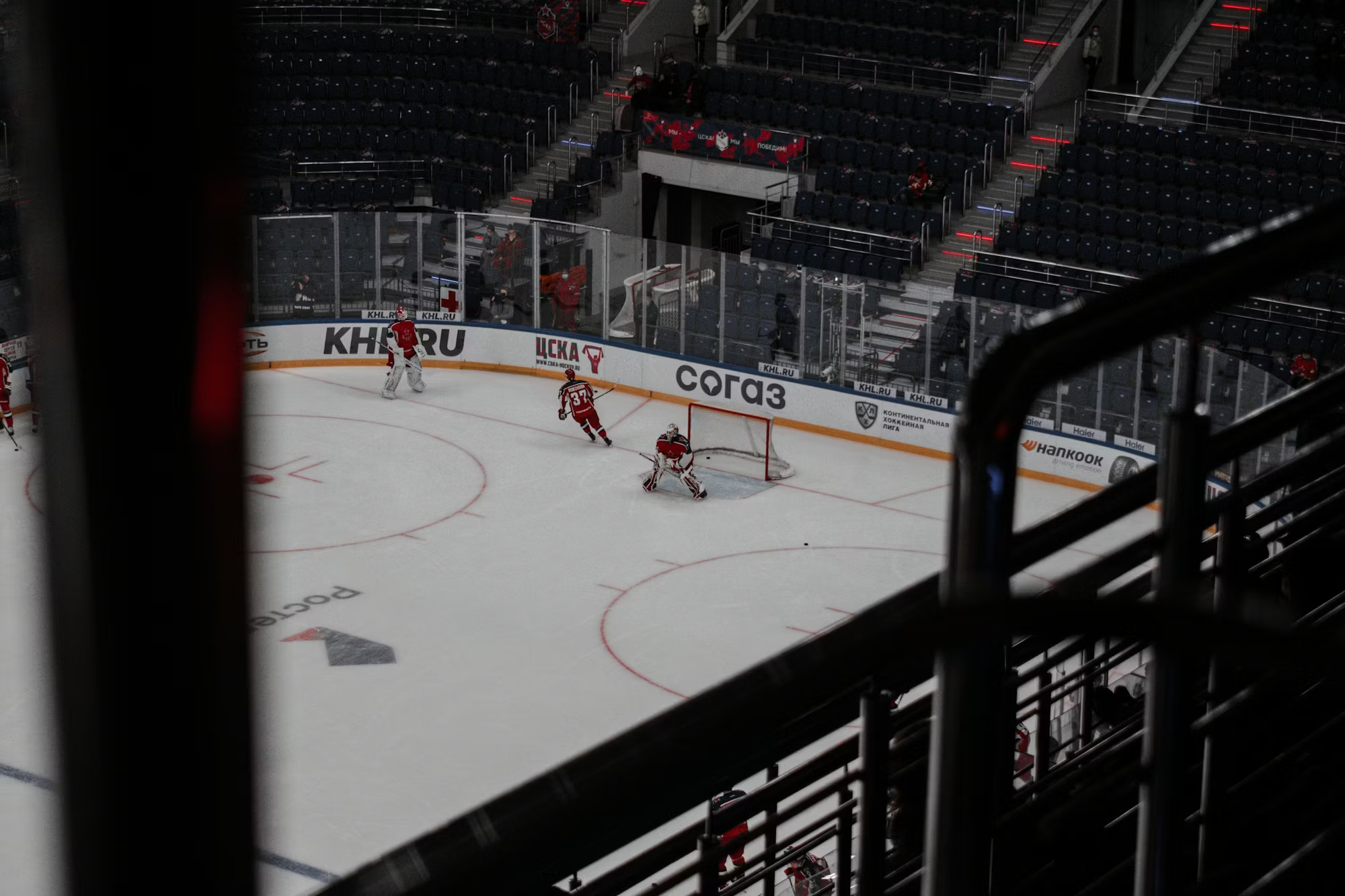
Hockey is a sport that combines speed, agility, and strategy, requiring players to master a variety of skills and techniques to succeed on the ice or field. From the basics of skating and stickhandling to advanced strategies, understanding these essential elements is crucial for players looking to improve their game. This article delves into the core skills needed in hockey, providing insights for both aspiring athletes and seasoned players.
At the heart of hockey lies the fundamental skill of skating. Whether playing ice hockey or field hockey, effective skating techniques are vital. Players must develop balance, speed, and agility to navigate the playing surface efficiently. For ice hockey, mastering the art of gliding on skates is crucial. Players should focus on proper posture, ensuring their knees are bent and their weight is evenly distributed. Drills that emphasize quick starts and stops, as well as crossovers, help build the muscle memory needed for effective skating.
In field hockey, while the fundamental principles of running apply, players must also learn to maneuver while controlling the ball. This requires a combination of sprinting, lateral movement, and quick changes in direction. Practicing sprints, shuttle runs, and cone drills can enhance a player’s footwork and overall agility, essential for staying one step ahead of opponents.
Another critical aspect of hockey is stickhandling, the skill of controlling the puck or ball while moving. Mastering stickhandling involves developing hand-eye coordination and fine motor skills. Players should practice using various techniques, such as the one-handed drag or the quick flick, to maneuver around defenders. Incorporating drills that simulate game situations, such as weaving through cones or engaging in small-area games, can significantly enhance a player’s stickhandling abilities.
Passing is a fundamental skill that every hockey player must excel in, as it allows teams to maintain possession and create scoring opportunities. Accurate passing requires good communication and awareness on the ice or field. Players should practice different types of passes, including forehand, backhand, and saucer passes, to develop versatility. Emphasizing the importance of passing with purpose, players can learn to read the play and anticipate their teammates’ movements, leading to smoother transitions and better offensive plays.
Shooting is perhaps the most exciting skill in hockey, as it directly contributes to scoring goals. Players need to develop a variety of shooting techniques, including wrist shots, slap shots, and snap shots. Each shot has its application, and practicing these techniques helps players become more versatile scorers. Key components of effective shooting include proper stance, weight transfer, and follow-through. Players should also focus on shooting accuracy by targeting specific areas of the goal during practice.
In addition to individual skills, understanding goaltending techniques is essential for ice hockey. Goalies play a crucial role in a team’s success and must master various skills, including positioning, puck tracking, and save techniques. A good goalie should be agile and able to read the play, anticipating where the puck will go. Drills that focus on lateral movement, glove saves, and rebound control help goalies hone their craft, ensuring they are prepared for high-pressure situations during games.
Defensive tactics are equally important in hockey, as strong defensive play can thwart the opponent’s scoring chances. Players must learn to position themselves effectively, utilizing body positioning and stick checking to disrupt the flow of the game. Understanding the principles of gap control, where defenders maintain the appropriate distance from attackers, is critical. Practicing defensive drills that simulate one-on-one situations or breakouts can help players develop their defensive instincts.
Tactical strategies play a significant role in hockey, and players should be familiar with different formations and plays. For ice hockey, common systems such as the 1-2-2 or the 2-1-2 provide frameworks for both offensive and defensive strategies. Players must learn to adapt their style of play based on the system in place and their opponents’ tactics. Incorporating strategy discussions into practice sessions can help players understand their roles within the team framework.
Another important aspect of hockey is the mental game. Players must develop resilience, focus, and a strong competitive spirit. Mental preparation is often overlooked, yet it can significantly impact performance. Visualization techniques, where players imagine themselves succeeding in specific game scenarios, can enhance confidence and reduce anxiety. Additionally, fostering a positive team culture that emphasizes support and encouragement can boost morale and motivation.
In conclusion, mastering the skills and techniques of hockey requires dedication, practice, and a willingness to learn. From skating and stickhandling to shooting and defensive tactics, players must continually refine their abilities to excel in the game. By focusing on individual skills while also understanding the broader tactical aspects, athletes can develop into well-rounded players. Whether on the ice or field, the journey of mastering hockey is both challenging and rewarding, offering opportunities for personal growth and teamwork. As players dedicate themselves to honing their craft, they contribute not only to their success but also to the rich tradition of hockey as a beloved sport.
 Oliver Grant
 Emma Thompson