
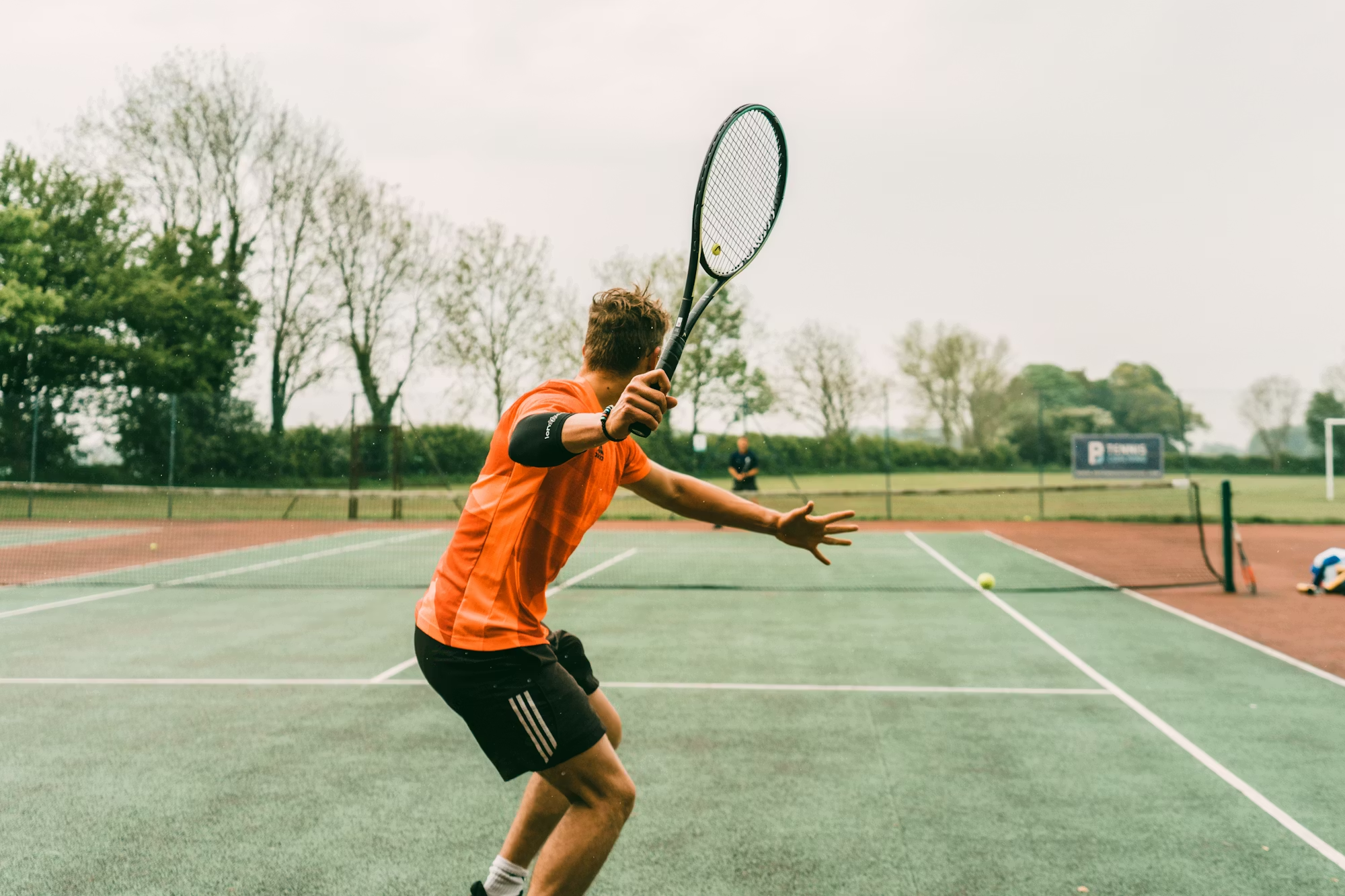
Tennis is a sport that combines athleticism, strategy, and mental resilience, making it crucial for players to master various skills and techniques. Whether you’re a beginner looking to improve your game or an advanced player striving for excellence, understanding the essential components of tennis is key. This article will break down the vital skills every player should develop, provide insight into effective training methods, and highlight the physical demands of the game.
Essential Tennis Skills
At the heart of every successful tennis player are several core skills that form the foundation of their game. These skills include the forehand, backhand, serve, volley, and footwork. Each of these techniques plays a significant role in a player’s ability to compete effectively on the court.
Forehand and Backhand
The forehand and backhand strokes are the two primary groundstrokes in tennis. The forehand, typically the stronger shot for most players, is executed by swinging the racket across the body from the dominant side. A proper grip, stance, and follow-through are essential for generating power and accuracy. Players should practice their forehand consistently, focusing on hitting the ball with the correct timing and spin.
The backhand, on the other hand, can be executed with either one hand or two, depending on the player’s preference and style. A two-handed backhand offers stability and power, while a one-handed backhand allows for greater reach and finesse. Players must ensure they practice both strokes equally to develop a well-rounded game.
Serving
The serve is perhaps the most crucial shot in tennis, as it initiates each point. A powerful and accurate serve can set the tone for a match. Players should focus on developing a consistent serving motion, practicing different types of serves, including flat, slice, and kick serves. Proper footwork and body positioning are essential for maximizing serve effectiveness, as is the ability to serve from different parts of the court.
Volleying
Volleys are shots hit before the ball bounces, usually executed near the net. Strong volleying skills can give players a significant advantage, especially in doubles play. Players must work on their timing, positioning, and racket control to become proficient at volleying. Quick reflexes and an ability to anticipate the opponent’s shots are also vital for successful net play.
Footwork
Effective footwork is fundamental to all aspects of tennis. Players must develop agility and balance to move swiftly around the court, positioning themselves optimally for each shot. Drills that focus on lateral movement, quick sprints, and balance exercises can significantly enhance a player’s footwork. Understanding how to read the game and anticipate where the ball will go can also improve movement and efficiency on the court.
Strategies for Success
Beyond mastering individual skills, players must also develop strategies that can help them win matches. Understanding opponents’ weaknesses, varying shot placement, and constructing points methodically are crucial components of match play. Players should analyze their opponents’ playing styles and adapt their strategies accordingly, whether that means playing aggressively or adopting a more defensive approach.
Mental Toughness
Mental toughness is another critical aspect of tennis. The ability to stay focused under pressure, maintain a positive attitude, and recover from setbacks is essential for success. Players can enhance their mental game through visualization techniques, mindfulness exercises, and practice scenarios that simulate match pressure. Learning to manage emotions and maintain composure during high-stakes moments can be the difference between winning and losing.
Effective Training Methods
To improve these skills, players must engage in structured training routines. A well-rounded training program should include skill development, fitness training, and match play. Here are some effective training methods:
Drills
Regular practice drills are vital for honing specific skills. Players should incorporate drills that focus on each stroke, serving, volleying, and footwork. For example, repetitive forehand and backhand drills can enhance consistency, while serving drills can help improve accuracy and power. Incorporating drills that mimic match situations can also be beneficial for developing strategic thinking and shot selection.
Fitness and Conditioning
Tennis is a physically demanding sport that requires strength, endurance, and agility. Players should include a fitness regimen that focuses on cardiovascular conditioning, strength training, and flexibility exercises. Activities like running, cycling, and strength training can improve overall fitness levels, while yoga or stretching can enhance flexibility and prevent injuries.
Match Play
Regularly competing in practice matches is essential for applying learned skills in real-game situations. Players can benefit from playing against opponents of varying skill levels to challenge themselves and adapt to different playing styles. Analyzing match performances afterward can provide valuable insights into areas for improvement and help refine strategies.
Conclusion
Mastering the skills and techniques of tennis is a journey that requires dedication, practice, and a commitment to continuous improvement. From developing effective strokes to enhancing footwork and mental toughness, each aspect contributes to a player’s overall performance. By implementing structured training methods and focusing on both physical and mental preparation, players can elevate their game and achieve their tennis aspirations.
Tennis is not just about athletic ability; it’s also a mental and strategic game that rewards those who invest the time and effort to master its intricacies. As players grow in their understanding of the sport, they not only enhance their own skills but also gain a deeper appreciation for the game and its rich traditions.
